
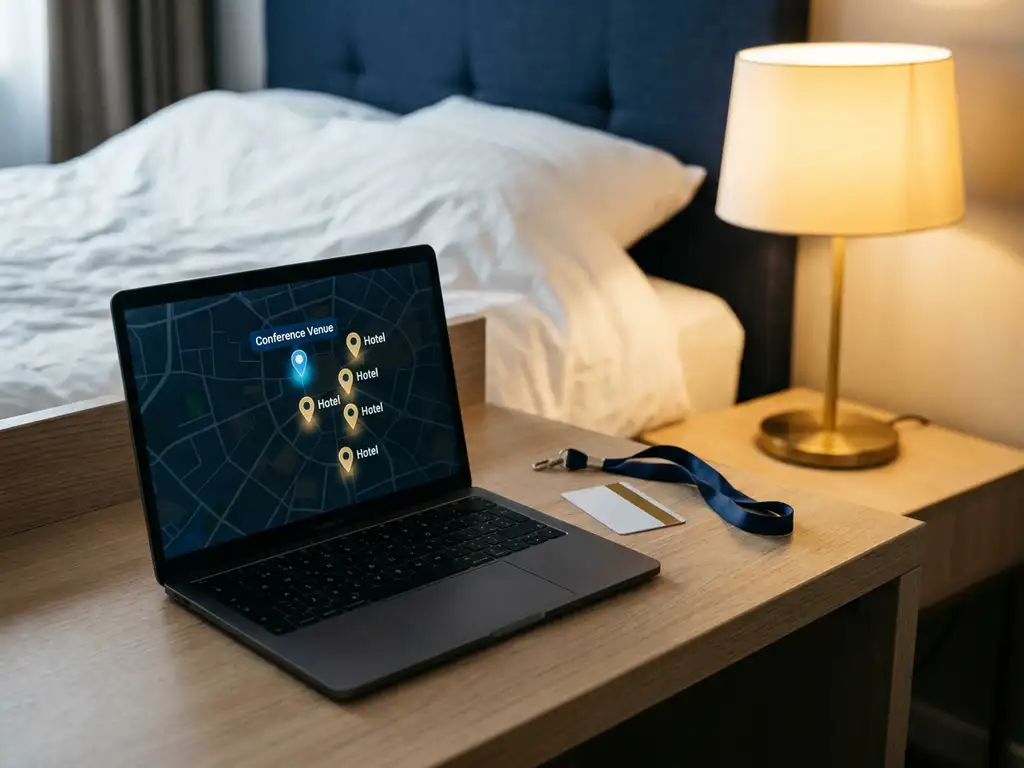
An attendee hotel booking portal for a conference is a dedicated, branded platform embedded into an event’s official website that allows attendees to browse and book nearby accommodation directly through a trusted event channel. Rather than sending attendees to a generic booking site, the conference provides a curated selection of hotels with pre-negotiated or pre-allocated room inventory. The sections below break down exactly how these portals work, who benefits, and when it makes sense for a hotel to get involved.
What happens when a conference sets up a hotel booking portal?
When a conference sets up a hotel booking portal, it creates a branded accommodation hub within its own website or registration flow where attendees can search, compare, and book hotels that have been specifically linked to that event. The portal displays available rooms, distances to the venue, pricing, and cancellation policies, all within the event’s own brand environment.
The process typically begins before registration opens. Event organizers work with a platform provider to set up the booking engine, connect participating hotels, and configure the experience so it feels like a natural extension of the event website rather than a redirect to a third-party site. Attendees searching for accommodation see hotels that have already opted in to serve that specific event, which means the inventory shown is relevant and proximity-focused from the start.
This setup benefits everyone in the chain. Attendees avoid the guesswork of searching independently. Hotels gain exposure to a highly qualified audience of people who have already committed to attending. And event organizers earn commission on every completed booking without managing the process themselves.
How do hotels get listed on a conference booking portal?
Hotels get listed on a conference booking portal by joining the platform’s hotel network, uploading their room availability, and allocating inventory to specific events they want to participate in. There are no upfront fees to join, and hotels retain full control over which events they appear on, how many rooms they offer, and what pricing and cancellation policies apply.
Once a hotel is part of the network, the platform matches it to relevant events based on location. Hotels near a convention centre, for example, will be surfaced to conference organizers running events in that city. The hotel can then choose to allocate a room block to that event, set its own terms, and appear on the official booking page for attendees.
The key distinction from traditional group sales is that hotels do not need to negotiate individual contracts with each event organizer. The platform handles the operational connection, meaning a hotel can participate in multiple events throughout the year without a proportional increase in administrative work.
How does live map technology help attendees choose a hotel?
Live map technology on a conference hotel booking portal shows attendees the real walking or travel distance from each listed hotel to the event venue, helping them make practical lodging decisions based on proximity rather than guesswork. Instead of estimating distances from a static list, attendees see exactly how far each property is from where they need to be.
This matters more than it might initially seem. Conference attendees often have packed schedules with early morning sessions and evening networking events. A hotel that looks close on a standard map might involve a complicated route or an unreliable transit connection. Live distance calculations surface that reality upfront, reducing friction in the decision-making process and increasing booking confidence.
For hotels, appearing near the top of a distance-sorted list is a genuine competitive advantage. Properties closest to the venue receive priority visibility, which means a well-located hotel that has joined the portal network benefits directly from its geography in a way that a standard OTA listing does not replicate.
What’s the difference between a conference hotel portal and booking on an OTA?
The core difference between a conference hotel booking portal and an online travel agency is intent and context. An OTA is a general marketplace where a traveller searches independently with no connection to any specific event. A conference hotel portal captures attendees at the moment they are already committed to attending, making every visitor a pre-qualified, high-intent booker with a specific arrival and departure window.
There are several practical differences worth understanding:
- Audience quality: Portal visitors are confirmed event attendees. OTA visitors are general travellers with no guaranteed intent to book.
- Commission structure: OTAs typically charge hotels between 15 and 25 percent per booking. A conference portal operates on a different model where the commission is shared with the event organizer, often at a significantly lower cost to the hotel.
- Inventory control: On a conference portal, hotels allocate a specific block of rooms to a specific event on their own terms. OTA listings are always-on and require ongoing rate management across a broad audience.
- Booking context: Attendees booking through an official event portal trust that the listed hotels are vetted and proximate. That trust translates into higher conversion rates and fewer abandoned bookings.
For hotels focused on event-driven demand, a conference portal is a more targeted and often more cost-effective channel than relying on OTA visibility alone.
Who manages customer service and booking changes on a hotel portal?
On a well-structured conference hotel booking portal, the platform provider manages all customer service, booking modifications, and cancellation requests on behalf of both the hotel and the event organizer. Attendees contact the platform rather than calling the hotel directly, which removes a significant operational burden from hotel staff.
This is one of the more underappreciated advantages of a managed portal model. During peak event periods, hotels can face a surge of attendee inquiries about room types, early check-ins, and last-minute changes. When the platform absorbs those interactions, front desk and reservations teams can focus on guests who are already on property rather than managing pre-arrival communications at scale.
Payment processing is also handled centrally. Hotels receive their earnings after the event concludes without needing to manage individual transactions or chase payments from multiple attendees. The platform reconciles bookings and transfers funds directly, keeping the financial process clean and predictable.
When should a hotel join a conference booking portal?
A hotel should join a conference booking portal when it is located near venues that regularly host conferences, trade shows, or large professional events and is not consistently capturing that demand through existing channels. If a hotel regularly sees unexplained occupancy spikes during event weeks but struggles to fill rooms on the surrounding nights, a portal connection can help capture that demand more reliably and earlier in the booking cycle.
The timing within the event calendar also matters. Hotels that join a portal network before major events in their city are listed on official booking pages from the moment attendee registration opens. Early visibility means early bookings, which improves revenue predictability and reduces the need to discount rooms closer to the event date to fill remaining inventory.
For hotels with midweek occupancy gaps, conference portals are particularly valuable. Many large professional events run from Monday to Thursday, which are traditionally softer nights for leisure-focused properties. Event-driven demand fills exactly those gaps without requiring additional marketing spend or rate manipulation to attract general travellers.
How EventHost helps hotels connect with conference attendees
EventHost provides a free hotel listing service that connects properties directly to qualified, event-driven demand through official conference booking portals. We handle everything from setup to settlement, so hotels can participate without operational complexity or upfront cost. Here is what joining the EventHost network includes:
- Free listing and setup: No subscription fees, no hidden costs, and no technical expertise required to get started.
- Event-by-event inventory control: Hotels choose which events to participate in, how many rooms to allocate, and what pricing and cancellation terms to apply.
- Live map visibility: Properties appear on official event booking pages with real distance calculations to the venue, giving well-located hotels a natural advantage.
- Fully managed customer service: We handle all attendee inquiries, booking modifications, and cancellations so hotel staff are not pulled into pre-arrival support at scale.
- Direct payment transfers: Earnings are transferred to the hotel after each event concludes, with no payment chasing required.
- Real-time reporting: Hotels get full visibility into room pickup rates and revenue generated per event through a centralized management system.
If your hotel is near a convention centre or regularly hosts guests during local events, EventHost gives you a direct route into official conference booking channels without the cost or complexity of traditional group sales. Get in touch with our team to list your property and start appearing on the events that matter most to your market.