
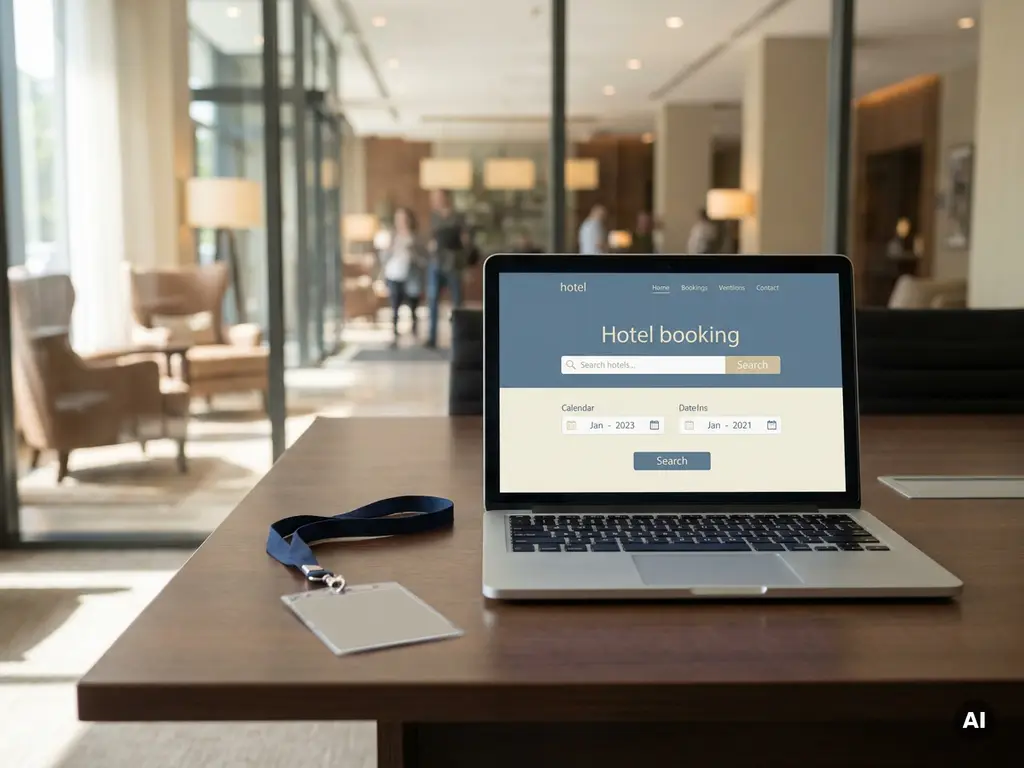
Technology plays a central role in how event organisers manage hotel bookings by automating inventory coordination, enabling real-time availability tracking, and embedding accommodation options directly into event registration workflows. Rather than relying on manual spreadsheets or fragmented communication with hotels, modern hotel booking technology for events connects all stakeholders through a single, integrated platform. The questions below unpack exactly how each layer of that technology works and what it means for event organisers in 2026.
How has technology changed the way event organisers manage hotel bookings?
Technology has fundamentally shifted event hotel management from a manual, relationship-dependent process into an automated, data-driven workflow. Event organisers can now manage room blocks, track pickup rates, and communicate with multiple hotel partners simultaneously through a single platform, replacing hours of back-and-forth emails and phone calls with real-time dashboards and automated alerts.
Before dedicated event hotel management software existed, coordinating accommodation for a large conference or trade show meant individually negotiating contracts with hotels, manually tracking how many rooms had been booked, and chasing updates as the event date approached. The risk of overselling or underselling room blocks was high, and attendees were often left to find their own accommodation with no guidance on proximity to the venue.
Today, purpose-built hotel booking platforms for events handle all of that automatically. Inventory syncs in real time, alerts trigger when pickup thresholds are reached, and attendees receive a curated list of nearby hotels the moment they complete registration. The result is a smoother experience for attendees, less operational burden for organisers, and better occupancy outcomes for hotel partners. For a broader view of how this connects the events and hospitality industries, the event partner booking ecosystem is worth exploring.
What is a white-label hotel booking platform and how does it work for events?
A white-label hotel booking platform is a ready-built booking engine that event organisers can deploy under their own brand, without building any technology themselves. For events, it works by embedding directly into an event website or registration flow, presenting attendees with a branded accommodation booking experience that feels like a native part of the event rather than a redirect to a third-party site.
The white-label approach matters for two key reasons. First, it preserves brand trust. Attendees are more likely to book accommodation through a channel that carries the event’s branding than through an unfamiliar external site. Second, it captures booking intent at the highest-conversion moment, which is immediately after an attendee has committed to attending by purchasing a ticket or completing registration.
Operationally, the platform connects to a network of hotel partners who have already agreed to make inventory available for events. The organiser does not need to negotiate individual hotel contracts or manage relationships with multiple properties. The platform handles availability display, booking confirmation, payment processing, and customer service, leaving the organiser free to focus on the event itself.
How does live map technology help attendees choose the right hotel?
Live map technology helps attendees choose the right hotel by displaying accurate walking or travel distances from each available property to the event venue, rather than relying on rough proximity estimates or postcode-based sorting. This means attendees can immediately see which hotels are genuinely convenient and make booking decisions based on real-world travel time rather than map aesthetics.
For large events held in city centres or convention districts, the difference between a five-minute walk and a twenty-minute commute can significantly affect an attendee’s daily experience. Live map integration surfaces that distinction clearly, which reduces post-booking complaints and improves overall attendee satisfaction.
From a hotel visibility perspective, this technology also creates a fairer, more useful ranking system. Hotels closest to the venue receive priority visibility not because they have paid for placement, but because proximity is genuinely the most relevant factor for event attendees. This benefits both attendees, who get the most useful information, and hotels, whose ranking reflects a meaningful competitive advantage.
What are the benefits of real-time inventory management for event hotel blocks?
Real-time inventory management for event hotel blocks ensures that room availability displayed to attendees is always accurate, eliminating the risk of overbooking and reducing the administrative effort of manually updating allocation counts. When a room is booked, the inventory count updates instantly across all channels, and configurable alerts notify hotel partners when pickup reaches predefined thresholds.
For event organisers, the practical benefits are significant:
- Accurate availability displays: Attendees never encounter a sold-out room that still appears available, protecting the organiser’s reputation and reducing customer service queries.
- Threshold alerts: Automated notifications trigger when room blocks reach a certain fill rate, giving organisers time to negotiate additional inventory before it runs out.
- Automatic release of unsold inventory: Rooms not booked by a cutoff date are released back to the hotel automatically, removing the need for manual reconciliation.
- Post-event reporting: Comprehensive pickup data and booking summaries allow organisers to evaluate performance and plan more accurately for future events.
For hotels, real-time synchronisation means their own property management systems stay aligned with event booking activity, reducing the operational complexity of managing event-specific allocations alongside regular reservations.
How can event organisers earn commission through hotel booking technology?
Event organisers earn commission through hotel booking technology by embedding a commission-based booking engine into their event platform, which generates a revenue share on every hotel booking made by their attendees. The organiser does not need to manage payments, negotiate hotel rates, or handle customer service. The platform processes each booking and transfers the organiser’s commission automatically after the event concludes.
This model turns accommodation coordination from a logistical burden into a passive revenue stream. For large events with hundreds or thousands of attendees, the cumulative commission from hotel bookings can represent a meaningful contribution to overall event revenue, without any additional marketing spend or operational effort from the organiser.
The commission structure is typically funded by the hotel partner rather than passed on to the attendee, meaning the booking price for attendees remains competitive. Hotels are willing to participate because the platform delivers qualified, high-intent demand directly to them at the moment attendees are actively planning their trip, which is a more efficient acquisition channel than broad OTA advertising.
What should event organisers look for in a hotel booking technology partner?
Event organisers should look for a hotel booking technology partner that offers zero upfront costs, a broad hotel network with verified proximity data, full white-label customisation, real-time inventory management, and end-to-end customer service handling. The right partner eliminates operational burden rather than adding it, and provides transparent performance reporting so organisers can measure the value delivered.
Beyond the core features, a few additional criteria are worth evaluating:
- Integration simplicity: The platform should embed into existing event websites or registration systems without requiring significant technical resources from the organiser’s team.
- Hotel network quality: A large global hotel network ensures attendees have genuine choice, regardless of the event’s location.
- Managed customer service: Booking modifications, cancellations, and attendee queries should be handled by the platform, not redirected to the organiser.
- Commission transparency: Payouts should be clearly reported and transferred automatically, with no hidden deductions.
- Scalability: The platform should perform equally well for a 200-person industry conference and a 10,000-attendee trade show.
Choosing a partner that handles all of these elements under one roof means the organiser can stay focused on delivering a great event, while the accommodation side runs itself. Explore how EventHost’s platform approaches this for event partners.
How EventHost supports event organisers with hotel booking technology
We built EventHost specifically to solve the challenges outlined throughout this article, providing event organisers with a fully managed, white-label hotel booking platform that requires zero investment to implement. Here is what we handle on your behalf:
- Embedded booking engine: Our platform integrates directly into your event website, maintaining your branding while giving attendees access to hotels across our network of 2.7 million properties worldwide.
- Live map technology: Attendees see real walking and travel distances to the venue, so they book with confidence and you receive fewer proximity-related complaints.
- Real-time inventory management: Bookings sync instantly, threshold alerts keep you informed, and unsold inventory is released automatically before your event date.
- Commission payouts: You earn a commission on every booking made through your platform, paid automatically after the event with full reporting provided.
- End-to-end customer service: We manage all attendee queries, booking modifications, and cancellations so your team does not need to.
- No setup fees or hidden costs: Implementation is completely free, and our revenue model is aligned with your success.
If you are ready to turn your event’s accommodation into a revenue stream without adding operational complexity, get started as an EventHost partner and we will take care of the rest.