
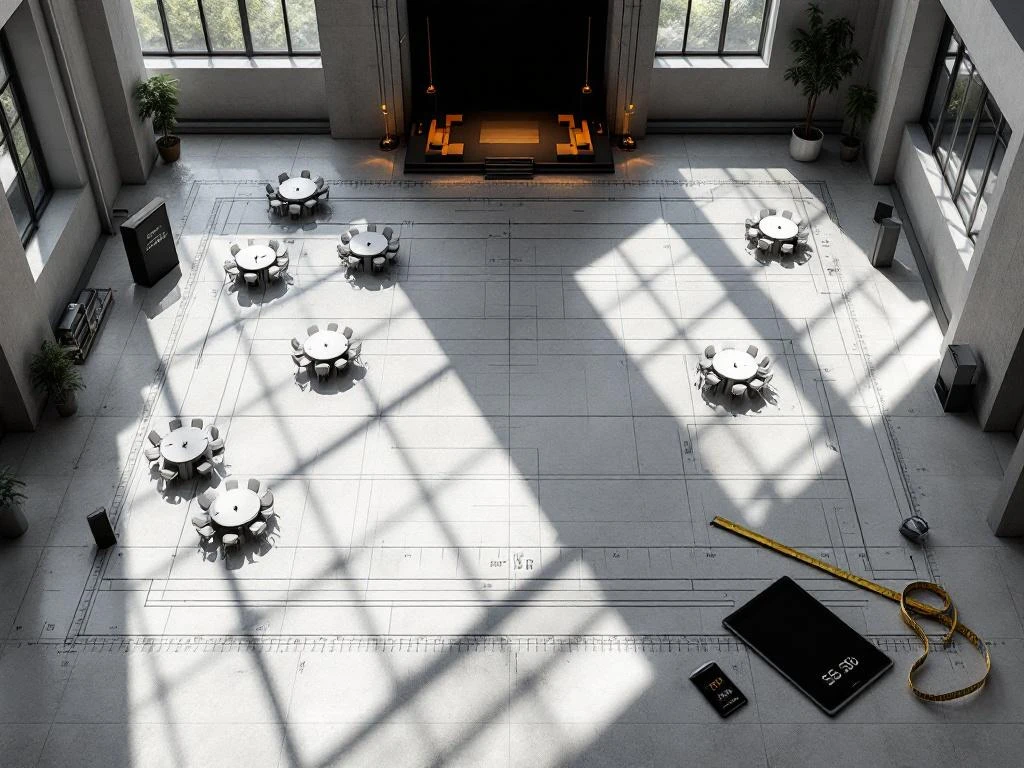
Event space calculation depends on your guest count, event type, and activities planned. Generally, you need 6-8 square feet per person for cocktail receptions, 10-12 square feet for seated dinners, and 15-20 square feet for conferences with breakout areas. Calculate your venue space requirements by considering seating arrangements, circulation paths, and additional zones for registration, catering, and accessibility needs.
What factors determine how much space you actually need for an event?
Your event space requirements depend on multiple variables that work together to determine the total square footage needed. Guest count serves as your baseline, but event type, activities, catering style, and accessibility requirements significantly impact your final calculations.
Event format plays a major role in space planning. A networking cocktail reception requires less space per person than a formal seated dinner with entertainment. Trade shows need exhibition space plus visitor circulation areas, while conferences require presentation rooms, breakout spaces, and networking zones.
Consider these important factors when calculating event space:
- Total guest attendance and registration expectations
- Seating style and table arrangements planned
- Catering service type (buffet, plated, cocktail style)
- Entertainment or presentation requirements
- Registration and welcome areas
- Accessibility compliance and wheelchair access
- Vendor setup and storage needs
Different event formats affect your space calculations significantly. Corporate conferences need more space per attendee than cocktail parties because participants require desk space, note-taking room, and comfortable seating for extended periods.
How do you calculate space per person for different event types?
Standard space allocations vary dramatically by event format and guest interaction patterns. Cocktail receptions need 6-8 square feet per person, while seated dinners require 10-12 square feet, and conference formats need 15-20 square feet per attendee including circulation and activity areas.
Here are the industry-standard space requirements for common event types:
- Cocktail receptions: 6-8 square feet per person (standing, mingling)
- Seated dinners: 10-12 square feet per person (round tables)
- Theatre-style conferences: 8-10 square feet per person
- Classroom setup: 12-15 square feet per person
- Trade show exhibitions: 20-30 square feet per attendee
- Networking events: 8-10 square feet per person
These calculations include basic circulation space but don’t account for additional requirements like stages, registration areas, or catering stations. You’ll need to add extra square footage for these elements based on your specific event needs.
Remember that venue space planning must accommodate peak occupancy periods. Even if guests arrive and leave at different times, calculate space based on maximum expected attendance at any given moment.
What’s the difference between usable space and total venue space?
Total venue space includes everything within the building’s walls, while usable event space excludes areas unavailable for guest seating and activities. Usable space typically represents 60-75% of total square footage after accounting for pillars, stages, kitchens, bathrooms, and required circulation paths.
When venues quote square footage, they often provide gross measurements that include unusable areas. You need to identify and subtract these spaces from your capacity calculations:
- Structural pillars and support columns
- Kitchen access and service corridors
- Bathroom facilities and coat check areas
- Fire exits and emergency egress paths
- Registration desks and welcome stations
- DJ booth, stage, or presentation areas
- Vendor setup and storage zones
Always request detailed floor plans showing these obstructions before finalizing your event capacity. A 1,000 square foot room might only provide 650-750 square feet of actual usable space for guest seating and activities.
Consider circulation requirements when calculating usable space. Guests need clear pathways between tables, to bathrooms, and around catering stations. These circulation zones reduce your effective capacity but improve guest comfort and safety.
How do seating arrangements affect your space requirements?
Different seating layouts dramatically impact your space needs and guest capacity. Theatre-style seating accommodates the most people (8-10 square feet per person), while classroom setups require more room (12-15 square feet per person) due to table space and aisle access requirements.
Compare space requirements for common seating arrangements:
- Theatre style: Chairs in rows, maximum capacity, limited interaction
- Classroom setup: Tables with chairs, note-taking space, moderate capacity
- Banquet rounds: 8-10 people per table, social dining, moderate capacity
- Cocktail style: Standing reception, high tables, maximum mingling
- U-shape configuration: Open discussion format, lowest capacity
Table sizes significantly impact your calculations. Standard 60-inch round tables seat 8 people comfortably and require approximately 100 square feet including chairs and circulation space. Rectangular banquet tables offer more flexibility but need careful spacing for guest access.
Aisle requirements vary by local fire codes but typically need 6-8 feet for main walkways and 3-4 feet between table rows. These circulation paths are necessary for safety and comfort but reduce your overall seating capacity.
What common mistakes do people make when calculating event space?
The most frequent error is underestimating circulation space and forgetting about non-seating areas. Many organizers calculate space based only on tables and chairs, overlooking registration zones, catering stations, entertainment areas, and required walkways that significantly reduce available capacity.
Common event space calculation mistakes include:
- Using gross square footage instead of usable space measurements
- Forgetting about vendor setup areas and equipment storage
- Not accounting for registration and welcome zones
- Overlooking accessibility requirements and wheelchair access
- Underestimating circulation paths and emergency egress needs
- Failing to plan for coat check and personal storage areas
- Ignoring local fire codes and occupancy restrictions
Another frequent mistake involves miscalculating table arrangements. Organizers often assume they can fit more tables than actually possible once proper spacing and access requirements are considered. Always create detailed floor plans before confirming guest capacity.
Don’t forget about service areas that impact guest space. Catering stations, bars, and buffet setups require significant square footage and create bottlenecks that affect circulation flow throughout your event.
How EventHost helps with event space and accommodation planning
We understand that calculating event space is just one piece of successful event planning. Once you’ve determined your venue requirements and capacity, your attendees need convenient accommodation options that complement your space planning efforts.
EventHost provides integrated hotel booking solutions that work alongside your event space planning:
- White-label booking platform that matches your event branding
- Live map technology showing real walking distances from hotels to your venue
- Access to 2.7 million hotels worldwide with proximity-based recommendations
- Commission-based revenue stream from every booking made through your platform
- Comprehensive customer service handling all guest accommodation inquiries
- Detailed post-event reporting showing booking performance and earnings
Ready to simplify accommodation planning for your next event? Contact us today to learn how our zero-cost hotel booking solution can generate additional revenue while providing attendees with convenient lodging options near your carefully planned event space.