
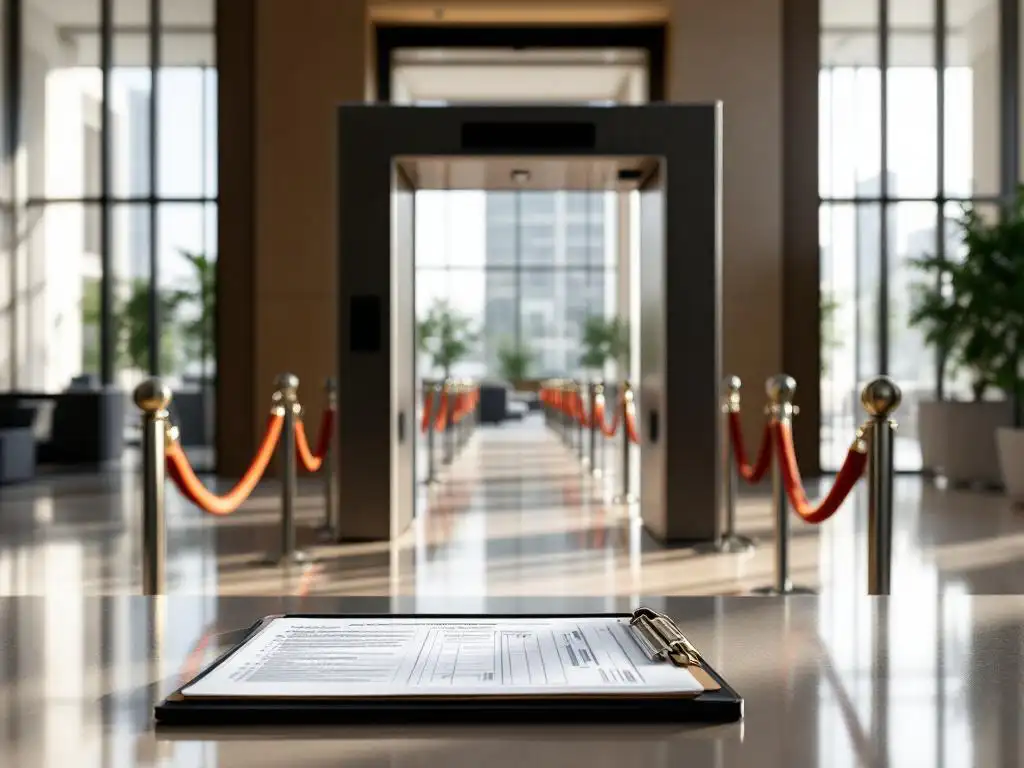
When you’re organising a high-profile government summit, corporate board meeting, or celebrity-attended conference, standard accommodation planning simply won’t suffice. These events demand heightened security measures that extend far beyond the venue itself, requiring careful coordination of where attendees stay, how they travel, and who has access to booking information.
Security-sensitive events present unique challenges that can make or break both attendee safety and event success. From protecting VIP delegates to maintaining confidentiality around attendance lists, every aspect of conference accommodation requires strategic planning and robust protocols.
When event security demands special accommodation planning
Certain events naturally require elevated security measures due to the profile of attendees, the sensitive nature of discussions, or potential threats. Government conferences often involve the sharing of classified information, while corporate summits may include market-moving announcements. Celebrity events attract unwanted attention, and high-profile industry gatherings can become targets for corporate espionage.
These events demand specialised housing protocols that go well beyond typical event accommodation. You’ll need to consider everything from attendee privacy to emergency evacuation procedures, making accommodation planning a critical component of your overall security strategy.
1: Create secure transportation corridors
Establishing protected routes between hotels and venues forms the backbone of secure event logistics. This involves coordinating with local authorities to identify the safest routes, considering factors such as traffic patterns, potential bottlenecks, and alternative routes in case of emergencies.
Work closely with local police or security services to understand any designated transport methods they recommend. Some events may require convoy-style movement, while others benefit from staggered departure times to avoid creating obvious targets. Consider the timing of attendee movement carefully, avoiding predictable patterns that could be exploited.
Remember that transportation security extends to hotel pick-up points. Coordinate with accommodation partners to establish discreet boarding areas away from public view, and ensure all drivers undergo appropriate background checks.
2: Vet and approve accommodation partners
Not every hotel can meet the security requirements of high-profile events. Your vetting process should include comprehensive background checks on the property, its ownership, and key staff members who’ll interact with your attendees.
Look for hotels with existing security certifications and experience hosting sensitive events. Many luxury properties already maintain relationships with government agencies or corporate security teams, making them natural partners for your event. Establish clear protocols for staff screening, ensuring that housekeeping, concierge, and front desk personnel understand confidentiality requirements.
Building trusted vendor relationships takes time, so start this process early in your planning cycle. Consider creating a pre-approved list of accommodation partners for future events, streamlining your security planning process.
3: Implement restricted booking access controls
Standard online booking systems won’t work for security-sensitive events. Instead, you’ll need invitation-only booking systems that require verification before anyone can make a reservation. This might involve secure registration portals where attendees must provide credentials or verification codes.
Implement multi-step verification processes that confirm both the identity of the person booking and their authorisation to attend your event. Consider using secure booking platforms that integrate directly with your event website while maintaining strict access controls.
Controlled guest list management becomes particularly important when dealing with plus-ones or accompanying staff. Establish clear protocols for who can approve additional bookings and how last-minute changes are handled securely.
4: Coordinate with hotel security teams
Your event security doesn’t operate in isolation from hotel security measures. Successful coordination requires sharing appropriate threat assessments with hotel security personnel while maintaining operational security around specific details.
Establish clear communication protocols between your security team and hotel personnel. This includes designated contact points, secure communication channels, and escalation procedures for potential incidents. Regular briefings help ensure everyone understands their role in maintaining attendee safety.
Ensure alignment between your event security measures and existing hotel protocols. This might involve temporary modifications to standard hotel procedures, such as enhanced ID checks or restricted access to certain floors during your event period.
5: What information should you share with hotels?
Determining what security details to communicate to accommodation partners requires a careful balance. You need to provide enough information for hotels to implement appropriate measures while maintaining operational security around sensitive details.
Generally, hotels need to understand the general threat level and any specific security requirements, such as restricted floor access or enhanced screening procedures. However, they don’t need detailed information about specific attendees or the nature of discussions taking place.
Establish formal information-sharing agreements that outline what can be communicated to different levels of hotel staff. Front desk managers might need more details than housekeeping staff, and all information sharing should be documented and controlled.
6: Set up secure check-in procedures
Standard hotel check-in procedures expose attendees to unnecessary risks and compromise confidentiality. Instead, create protected registration processes that might include private check-in areas away from the main lobby or dedicated registration times outside normal hotel traffic.
Implement robust identity verification protocols that go beyond standard ID checks. This might involve pre-registered photo verification or biometric confirmation, depending on your event’s security requirements.
Discreet room assignments help maintain attendee privacy while ensuring security personnel know exactly where everyone is located. Consider grouping attendees on specific floors or wings of the hotel to create controlled zones that are easier to monitor and secure.
7: Plan for emergency accommodation protocols
Even the best security planning must account for potential incidents that require rapid response. Develop comprehensive contingency plans that include backup accommodation options in case your primary hotels become compromised or unavailable.
Create rapid relocation procedures that can be activated quickly without causing panic among attendees. This includes pre-negotiated arrangements with alternative hotels and transportation resources that can be deployed at short notice.
Establish crisis communication protocols that keep guests informed while maintaining security. Attendees need to know what’s happening and what they should do, but communications must be controlled to prevent sensitive information from becoming public.
8: Monitor and audit accommodation security
Security isn’t a set-and-forget element of event planning. Implement systems for ongoing security assessment throughout your event, including regular check-ins with hotel security teams and continuous monitoring of potential threats.
Create incident reporting procedures that capture both actual security events and near-misses that could inform future planning. This documentation helps you refine your security protocols and provides valuable information for post-event reviews.
Conduct thorough post-event security reviews with all accommodation partners. These debriefs help identify what worked well and what could be improved, building your knowledge base for future security-sensitive events.
How EventHost helps with secure event accommodation
We understand that security-focused events require specialised accommodation solutions that go far beyond standard booking platforms. Our white-label hotel booking platform integrates seamlessly into your event website while maintaining the strict access controls and confidentiality requirements that high-security events demand.
Here’s how we support your security-focused event accommodation:
- Vetted hotel networks: Access to pre-screened accommodation partners with proven security capabilities
- Controlled booking access: Invitation-only systems with multi-level verification processes
- Secure payment processing: Protected financial transactions that maintain attendee privacy
- Comprehensive reporting: Detailed booking analytics while preserving confidentiality requirements
- Custom integration: Seamless embedding into your existing event platforms with complete brand control
Ready to explore how we can support your next security-sensitive event? Contact our team to discuss your specific requirements and learn more about our secure accommodation solutions. You can also discover partnership opportunities that help maximise your event revenue while maintaining the highest security standards.