
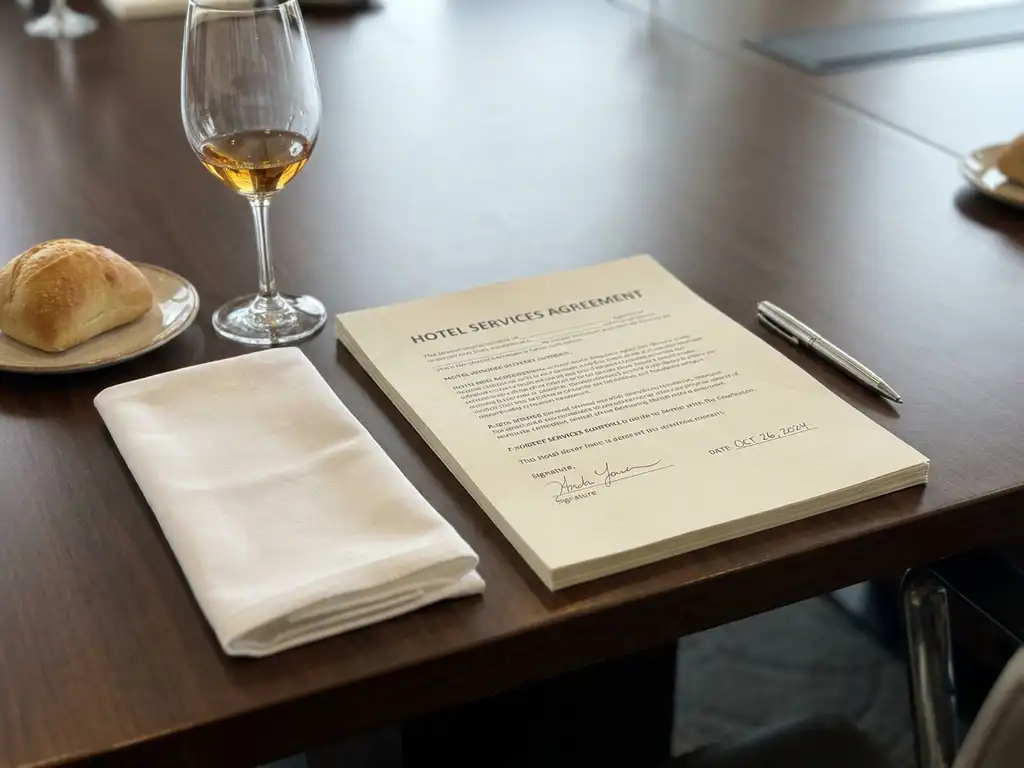
Food and beverage minimums in event hotel contracts are spending thresholds that require an event organizer to commit to a set dollar amount in F&B purchases as a condition of using the hotel’s event space. If that minimum isn’t met through food, drinks, or qualifying catering services, the hotel typically charges the difference as a penalty fee. These clauses appear in almost every hotel event contract and can significantly affect an event’s overall budget, attendee experience, and negotiating leverage. The sections below break down the most common questions organizers and hotel partners have about how F&B minimums actually work.
What counts toward a hotel’s food and beverage minimum?
Food and beverage minimums are typically met through any qualifying catering spend charged by the hotel, including meals, coffee breaks, cocktail receptions, and open bars. However, not every line item on a hotel’s invoice automatically counts. Understanding exactly what qualifies is essential before signing any hotel event contract.
Most hotels count the following toward the F&B minimum:
- Plated meals and buffets served during the event
- Coffee, tea, and refreshment breaks
- Cocktail receptions and hosted bar packages
- Banquet food and beverage packages
- Non-alcoholic beverages served in meeting rooms
What typically does not count includes service charges, gratuities, taxes, audio-visual equipment, room rental fees, and outside catering brought in by a third party. This distinction matters because service charges alone can add 20 to 25 percent on top of your food spend, yet they rarely count toward the minimum. Always ask the hotel for a written breakdown of qualifying versus non-qualifying items before finalizing the contract.
How are F&B minimums calculated in event contracts?
Hotels calculate F&B minimums based on a combination of factors: the size of the event space, the expected number of attendees, the day of the week, and the hotel’s own revenue targets for that space. The minimum is essentially the hotel’s way of ensuring the function room generates enough revenue to justify being taken off the market for other business.
In practice, a hotel will often set the minimum by estimating a realistic per-person spend for the type of event, then multiplying by the expected headcount. For example, a full-day conference with 200 attendees might carry a minimum calculated at a set per-person rate covering breakfast, lunch, and breaks. The hotel then builds in a buffer to protect against lower-than-expected attendance.
The day and timing of the event also influence the figure. Midweek events, which hotels are often more motivated to fill, may come with lower or more flexible minimums than peak weekend dates. Understanding this dynamic gives event organizers genuine room to negotiate, particularly when the event falls on dates the hotel would otherwise struggle to fill.
What happens if an event doesn’t meet the F&B minimum?
If an event falls short of the agreed food and beverage minimum, the hotel charges the organizer the difference between what was actually spent and the contracted minimum. This shortfall fee is treated as liquidated damages and is typically due regardless of the reason for underspending.
For example, if the F&B minimum is $15,000 and the event only generates $11,000 in qualifying food and beverage spend, the organizer owes the hotel $4,000 even though no additional food was consumed. This can come as a significant surprise to first-time event planners who assume the minimum is simply a target rather than a binding financial commitment.
Some contracts include provisions that allow a portion of the shortfall to be offset by room rental fees or other qualifying spend, but this is not standard. To protect against unexpected shortfalls, organizers should build a realistic F&B budget before committing to a minimum, factor in the possibility of lower-than-expected attendance, and negotiate a clause that allows the minimum to be adjusted proportionally if attendance drops below a defined threshold.
Should event organizers negotiate F&B minimums before signing?
Yes, event organizers should always negotiate F&B minimums before signing a hotel event contract. The minimum listed in a hotel’s initial proposal is rarely the lowest they will accept, and hotels frequently adjust these figures for events that bring guaranteed room nights, repeat business, or bookings during low-demand periods.
Effective negotiation strategies include:
- Tying room block commitments to a lower minimum: Hotels value guaranteed room revenue, and a strong room block commitment often gives organizers leverage to reduce the F&B floor.
- Requesting a sliding scale: Ask for a minimum that adjusts based on final confirmed attendance, protecting you if the event draws fewer participants than planned.
- Pushing for broader qualifying spend: Negotiate to include audio-visual charges, room rental fees, or service charges as qualifying items, which effectively reduces the gap you need to close through food alone.
- Targeting off-peak dates: Hotels are more willing to reduce minimums for events booked on traditionally slow nights, giving both sides a better outcome.
Getting any agreed adjustments in writing is non-negotiable. Verbal agreements about minimums rarely hold up when a contract dispute arises.
How do F&B minimums affect attendee hotel booking behavior?
F&B minimums indirectly affect attendee hotel booking behavior by influencing how event organizers structure their accommodation offerings. When an organizer commits to a large F&B minimum at a single venue, they often concentrate attendees at that property to maximize room block pickup and overall spend, which can limit the variety of lodging options available to attendees.
Attendees who prefer different price points, locations, or hotel brands may find themselves pushed toward a primary event hotel that doesn’t match their preferences. This can lead to attendees booking outside the official room block entirely, reducing the organizer’s ability to meet both room block attrition clauses and F&B minimums simultaneously.
Offering attendees a range of event hotel booking options at different properties and price points tends to increase overall accommodation pickup, which in turn strengthens the organizer’s negotiating position on F&B minimums at the primary venue. When hotels see strong room block performance, they are generally more flexible about waiving or reducing shortfall penalties.
What’s the difference between F&B minimums and room block attrition?
F&B minimums and room block attrition are two separate financial obligations in hotel event contracts, and both carry penalty clauses if not met. The key difference is what they measure: F&B minimums govern how much money is spent on food and beverage, while room block attrition governs how many hotel rooms are actually booked from the reserved block.
Room block attrition clauses typically require the organizer to fill a set percentage of the reserved rooms, often between 80 and 90 percent. If bookings fall short of that threshold, the organizer pays the hotel for the unsold rooms at a contracted rate. F&B minimums operate independently: even if the room block is fully absorbed, the organizer still owes the minimum food and beverage spend.
The two clauses interact in important ways. A poorly attended event can trigger both shortfalls simultaneously, creating compounding financial exposure. Organizers who negotiate attrition clauses carefully, including provisions for releasing unsold rooms back to the hotel before a cutoff date, reduce their overall risk profile. Understanding both obligations together, rather than in isolation, is essential to managing the total financial commitment of a hotel event contract.
How EventHost helps with hotel event contract management
Navigating F&B minimums, attrition clauses, and room block commitments is complex, and the financial stakes are real. EventHost simplifies the accommodation side of the equation so event organizers can approach hotel negotiations from a position of strength rather than uncertainty.
Here is how we help:
- Qualified room block demand: We connect attendees directly to event-specific hotel options through an embedded booking engine, increasing room pickup rates and strengthening your leverage when negotiating F&B minimums with the primary venue.
- Multiple hotel options for attendees: By offering a curated selection of nearby hotels rather than a single property, we reduce the risk of attendees booking outside official channels, which protects both room block performance and your overall contract position.
- Zero cost to event organizers: We manage all booking logistics, customer service, and payment processing at no charge, freeing your team to focus on contract negotiations and event delivery.
- Commission earnings on bookings: Every hotel booking made through our platform generates passive revenue for the organizer, helping offset costs including any F&B shortfall penalties.
- Real-time booking visibility: Our live reporting gives organizers clear pickup data throughout the booking window, so you can anticipate shortfalls and act before penalties kick in.
If you want to strengthen your room block performance and reduce financial exposure on your next event hotel contract, explore EventHost’s platform and see how we can support your next event.