
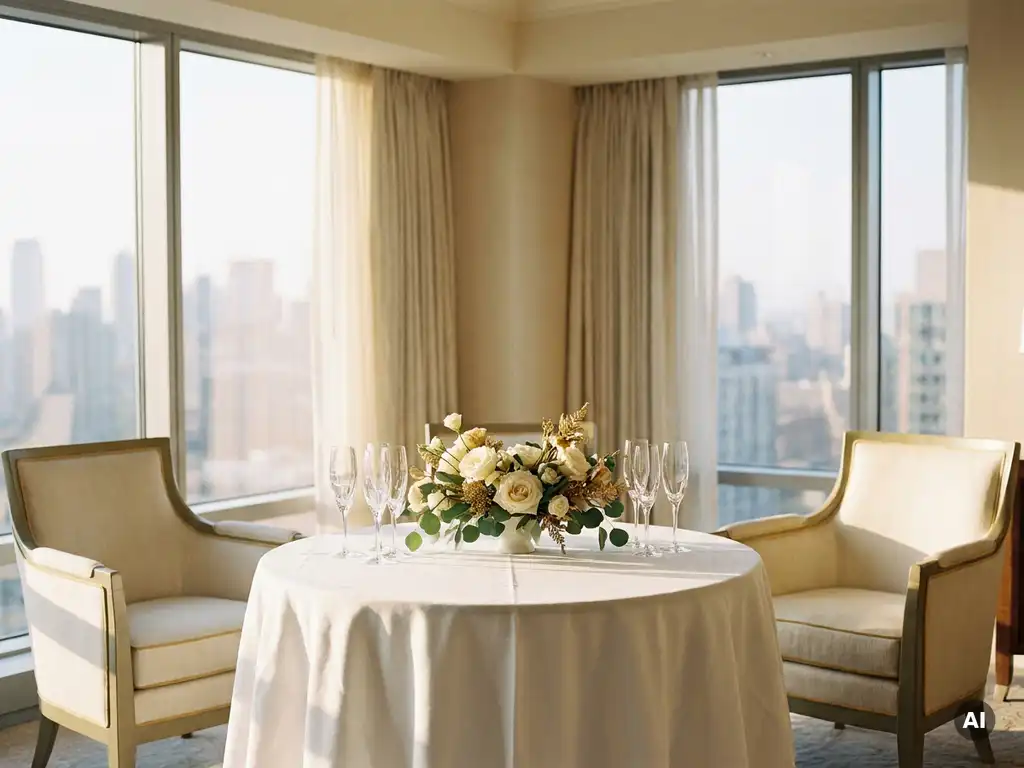
Setting up a hospitality suite at a hotel for an event involves reserving a dedicated suite or meeting space, furnishing it with food, beverages, and branded decor, and coordinating with the hotel on staffing, catering, and access logistics. The goal is to create a private, comfortable environment where guests, clients, or VIPs can network, relax, or conduct business away from the main event floor. This guide walks through everything from choosing the right space to avoiding the most common setup mistakes.
What exactly is included in a hotel hospitality suite?
A hotel hospitality suite is a private room or suite reserved by an event organizer, brand, or company to host guests during an event. It typically includes a lounge or seating area, a food and beverage setup, branded signage or decor, and dedicated staff or a host. The space functions as a semi-private extension of the event itself, designed for relationship-building rather than formal programming.
The specific contents of a hospitality suite vary depending on the event type and budget, but most setups include:
- Seating and furniture: Sofas, chairs, and tables arranged for conversation rather than conference-style presentations
- Food and beverages: Catered snacks, meals, or drinks provided either by the hotel or an external caterer
- Branded elements: Banners, tablecloths, digital screens, or signage that reinforce the company or event identity
- Entertainment or technology: Screens for presentations or demos, background music, or interactive displays
- Staffing: A host, brand ambassador, or catering team to welcome and serve guests
Some suites are purely social spaces, while others double as private meeting rooms or product showrooms. The format depends on what you want guests to do when they arrive.
How do you choose the right hotel room or space for a hospitality suite?
Choosing the right space for a hospitality suite comes down to three factors: proximity to the event venue, room size relative to expected guest volume, and the hotel’s willingness to accommodate custom setups. A suite that is difficult to find or far from the main event will see low attendance regardless of how well it is decorated or staffed.
When evaluating hotel spaces, consider the following:
- Location relative to the event: Ideally, the hotel should be within walking distance of the conference center or venue. Guests are far more likely to stop by between sessions if the suite is conveniently located.
- Room configuration: A junior suite or one-bedroom suite works well for smaller gatherings of 10 to 30 people. Larger groups may need a dedicated meeting room or penthouse suite with separate living and working areas.
- Hotel catering and licensing policies: Some hotels require you to use their in-house catering exclusively. Others allow outside caterers or self-catering for certain room types. Clarify this before signing a contract.
- Access and security: Confirm whether the space has a private entrance, keycard access, or a dedicated elevator. This matters for high-profile events where guest privacy is important.
For major conferences and trade shows, hotels directly connected to or adjacent to the convention center are the most sought-after properties. Booking early is essential because the best-positioned rooms fill up quickly once an event is announced.
What do you need to set up a hospitality suite at a hotel?
Setting up a hospitality suite at a hotel requires coordination across four main areas: the physical space, catering and supplies, branding and decor, and staffing. Getting all four right before the event opens ensures a smooth guest experience and avoids last-minute scrambles on the day.
Space and logistics
Confirm your room reservation well in advance and arrange a walkthrough with the hotel events coordinator. Identify where furniture will be positioned, where power outlets are located for screens or lighting, and what the hotel will provide versus what you need to bring. Request early access on setup day, as most hotels allow vendors and organizers to enter the room a few hours before the event begins.
Catering and supplies
Work with the hotel’s catering team or your own caterer to plan a menu appropriate for the time of day and the nature of the event. For evening receptions, cocktails and light bites are standard. For daytime suites during a conference, coffee, water, and finger food keep guests comfortable without being overly formal. Confirm quantities based on expected attendance, and always order slightly more than you think you will need.
Branding and staffing
Branded elements should be installed during the setup window before guests arrive. Assign at least one dedicated host who knows the schedule, can greet guests by name if possible, and can manage the flow of people in and out of the space. A well-briefed host is often the single biggest factor in how guests remember the experience.
How far in advance should you book a hotel hospitality suite?
For major events and conferences, you should book a hotel hospitality suite at least six to twelve months in advance. The most desirable rooms at hotels closest to large convention centers are frequently reserved within weeks of an event being announced, particularly for recurring annual events where the same companies rebook year after year.
For smaller regional events or less high-profile gatherings, three to six months of lead time is generally sufficient. However, the earlier you book, the more negotiating leverage you have on room rate, setup access times, and catering minimums.
If you are attending a major trade show such as a large industry conference, keep in mind that official event hotel booking channels often open months before general public availability. Registering through official event accommodation platforms gives you access to rooms that are specifically allocated for event attendees and may not appear on standard booking sites.
How much does a hotel hospitality suite cost for an event?
The cost of a hotel hospitality suite for an event varies widely depending on the city, the hotel tier, the room size, and the duration of the booking. In major convention cities, a standard suite used as a hospitality space for a three-day conference can range from a few hundred to several thousand per night, before factoring in catering, staffing, and decor.
The main cost components to budget for include:
- Room rate: Nightly rate for the suite or meeting space, which may differ from the standard guest room rate when the space is used for commercial or event purposes
- Food and beverage minimum: Many hotels require a minimum spend on catering when a room is used for hospitality purposes
- Setup and teardown fees: Some hotels charge for furniture rearrangement, AV setup, or extended access hours
- Staffing: Whether you hire your own host or use hotel-provided staff will affect total cost
- Branding and decor: Custom printed materials, digital screens, or floral arrangements add to the overall budget
Negotiating a package rate that bundles the room, catering minimum, and AV equipment is often more cost-effective than pricing each element separately. Hotels are usually willing to negotiate when you are booking multiple nights or committing to a guaranteed food and beverage spend.
What are the most common mistakes when running a hotel hospitality suite?
The most common mistakes when running a hotel hospitality suite are poor location choice, underestimating the importance of staffing, and failing to promote the suite’s location and hours to guests before the event. A beautifully decorated suite that nobody can find or that runs out of refreshments by midday delivers a poor return on investment regardless of how much was spent on setup.
Other frequent mistakes include:
- Booking too late: Waiting until a few weeks before the event and ending up with a room that is poorly located or too small for the expected guest count
- Ignoring hotel policies: Failing to review catering exclusivity clauses, noise restrictions, or occupancy limits before signing the contract
- Overpacking the schedule: Trying to run formal presentations in a space designed for informal networking creates awkward energy and slows guest flow
- No clear guest communication: Guests need to know the suite number, floor, access hours, and whether an invitation is required. Without this information distributed in advance, attendance suffers.
- Understaffing: A single host managing 40 guests, catering replenishment, and the door simultaneously will struggle. Plan staffing ratios based on realistic peak attendance times.
The suites that work best are the ones where the logistics are invisible. Guests arrive, feel welcomed immediately, and leave without having noticed any of the operational effort behind the experience.
How EventHost helps with hotel hospitality suite bookings at events
When you are planning a hospitality suite at an event, your first challenge is often finding the right hotel nearby. We make that step straightforward. EventHost connects hotels directly to event-driven demand through our hotel partnership network, so hotels near major events appear on official event booking pages where attendees and organizers are already searching.
For hotels, joining EventHost means:
- Zero cost to list: No subscription fees, no setup costs, and no commission paid upfront
- Direct access to qualified event demand: Your property appears in front of attendees and organizers who are actively booking for a specific event
- Full control over availability and pricing: You decide which events to participate in, how many rooms to allocate, and what rates to offer
- Managed customer service: We handle all guest inquiries, booking modifications, and payment processing so your team can focus on delivering a great stay
- Real-time room block management: Live inventory syncing, threshold alerts, and detailed pickup reporting give you complete visibility throughout the event cycle
If your hotel is located near a convention center or regularly hosts event attendees, listing with EventHost puts you in front of the right guests at the right moment. Get in touch with us today to add your property to our network and start capturing event-driven demand without the overhead.