
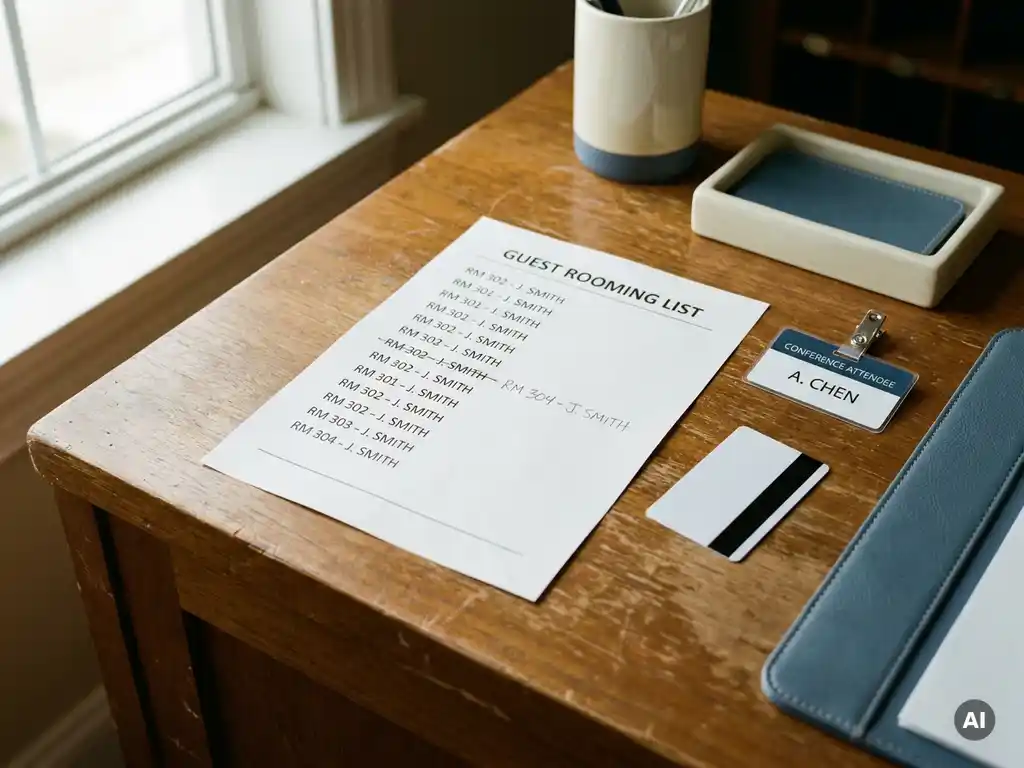
To update a hotel rooming list after changes, contact the hotel’s group sales or reservations contact directly with a revised list that reflects the updated guest names, arrival and departure dates, room types, and any special requests. Most updates are handled by email or through the hotel’s group booking portal, and the sooner you submit changes, the easier it is for the hotel to accommodate them.
Rooming list changes are a normal part of managing group hotel bookings for events, and hotels expect them. What matters most is knowing who to contact, what information to include, and how to act before the cutoff date to avoid penalties or lost inventory.
Who is responsible for submitting rooming list updates?
The event organizer or designated group coordinator is typically responsible for submitting rooming list updates to the hotel. In larger organizations, this responsibility may sit with an event manager, travel coordinator, or housing bureau. The key is that one named point of contact should own all communication with the hotel to prevent conflicting updates and confusion.
On the hotel side, the group sales manager or reservations coordinator handles incoming rooming list changes. Before your event, confirm who your specific contact is and get their direct email address or phone number. Routing updates through a general inbox can slow down processing, especially close to arrival dates when hotel operations teams are busy.
If you are working with a third-party housing management provider or event platform, they may act as the intermediary and submit changes on your behalf. In that case, your job is to communicate changes to them clearly and promptly, so they can relay accurate information to the hotel without delay.
What information needs to change on a rooming list?
When updating a hotel rooming list, you need to clearly identify what has changed compared to the previously submitted version. Common changes include guest name corrections, updated arrival or departure dates, room type substitutions, additions or cancellations of individual reservations, and changes to special requests such as accessibility needs or bed configurations.
Always include the following with any update submission:
- Group name and event reference number so the hotel can match the update to the correct block
- Original guest name or reservation ID being modified
- Specific change required (for example, name change from Smith to Jones, or departure date moved from Tuesday to Wednesday)
- Updated room count if guests are being added or removed from the block
- Any revised payment or billing instructions if the change affects who is responsible for the room cost
Sending a clean, clearly labeled revised rooming list alongside a brief summary of what changed reduces the chance of processing errors. Avoid simply sending a new list without highlighting the differences, as hotel teams often manage multiple groups simultaneously and need to identify changes quickly.
How do you submit a rooming list change to a hotel?
The most common method for submitting a rooming list change is email, sent directly to your hotel group sales or reservations contact. Attach a revised rooming list in a standard format (Excel or CSV is widely accepted), include a short summary of the changes in the body of the email, and request confirmation that the update has been processed.
Some hotels use dedicated group booking portals or property management system links where you can log in and modify reservations directly. If your hotel offers this, it is often the fastest and most reliable method because changes are recorded in real time without relying on manual data entry by hotel staff.
For urgent changes close to the event date, a phone call followed by a written email confirmation is the safest approach. Verbal updates alone are not sufficient because they leave no paper trail and are easily forgotten during busy operational periods. Always get written confirmation that your change has been received and applied.
If you manage event hotel bookings across multiple properties, keeping a master change log helps you track which updates have been confirmed and which are still pending, reducing the risk of discrepancies between your records and the hotel’s.
What happens if you miss the rooming list cutoff date?
If you miss the rooming list cutoff date, the hotel may release unconfirmed rooms back into general inventory, apply penalty clauses from your group contract, or charge the full block rate regardless of actual occupancy. The cutoff date is a contractual deadline, and hotels enforce it to manage their yield and avoid holding inventory for groups that may not fill their commitment.
Missing the cutoff does not always mean all is lost. Contact your hotel group coordinator immediately and explain the situation. Many hotels will work with you on a case-by-case basis, particularly if you have a strong relationship with the property or if the change is minor. However, do not assume flexibility exists, especially for peak event dates when rooms are in high demand.
To avoid this situation, build internal deadlines that sit several days ahead of the hotel’s official cutoff. This gives your team buffer time to chase missing information from attendees, correct errors, and submit a clean final list before the hard deadline arrives.
How does real-time room block management reduce update errors?
Real-time room block management reduces update errors by synchronizing booking data automatically as changes occur, eliminating the lag and manual re-entry that cause discrepancies between organizer records and hotel systems. Instead of emailing revised spreadsheets back and forth, both parties see the same live data at the same time, which dramatically reduces the chance of outdated information being acted upon.
Traditional rooming list management relies on static documents that can quickly fall out of sync. An organizer sends a list, a guest changes their dates, the organizer updates their internal spreadsheet but forgets to resend it to the hotel, and the hotel continues working from the old version. This kind of error is common and can result in guests arriving to find incorrect reservations.
With a live management system, key improvements include:
- Automatic pickup tracking so you always know how many rooms have been booked against your block
- Threshold alerts that notify you when inventory is running low or when the block is underperforming
- Instant confirmation of changes without waiting for email responses from hotel staff
- Centralized reporting that gives both the organizer and the hotel a single source of truth for all reservation data
For events with large attendee numbers or multiple hotel partners, real-time systems are not just a convenience but a practical necessity for maintaining accuracy across a complex booking environment.
How EventHost simplifies hotel rooming list management
Managing rooming list changes across multiple hotels is one of the most time-consuming parts of running an event. EventHost removes that burden entirely by providing a centralized, live hotel block management system that keeps booking data synchronized in real time, so neither event organizers nor hotel partners are ever working from outdated information.
Here is what we handle on your behalf:
- Real-time inventory sync so room availability updates instantly as bookings are made or modified
- Automated threshold alerts that notify hotel partners when pickup reaches predefined levels
- Full guest inquiry and booking modification management, removing the need for hotels to field individual attendee requests
- Detailed reporting giving hotels complete visibility into room pickup, revenue, and event performance
- Zero cost to join with no setup fees, no subscription costs, and no marketing spend required
Hotels retain full control over their pricing, availability, and cancellation policies, while we manage the operational complexity. Event organizers benefit from a seamless hotel booking experience embedded directly into their event ecosystem, with commissions earned on every completed booking. If you want to stop managing rooming list updates manually and start capturing event-driven demand through a system built to handle it, get in touch with EventHost today.